500×500 vs 500×1000 LED Cabinets: Which Should You Buy?
Compare LED panel formats using screen dimensions, cabinet counts, handling and transport requirements. Work through 4 × 3 m and 4 × 2.5 m wall examples before quoting a rental fleet.
Choose the format around the screen sizes you will build
Choose 500 × 500 mm cabinets when 0.5 m height increments are useful across the layouts you expect to build. Consider 500 × 1000 mm cabinets when 1 m height increments suit those jobs and handling, packing and support arrangements fit the selected configuration. The taller panel covers twice the area, so it takes half as many cabinets for some wall sizes. That does not make the complete system half the price, weight or setup time.
Compare cabinet area and layout increments
Both formats in this comparison are 500 mm wide. The difference is cabinet height: 500 mm versus 1000 mm. The inch dimensions below are approximate conversions for planning; use the manufacturer’s exact millimetre dimensions for the layout and order. These are cabinet formats, not promises of a particular pitch, brightness, service direction or control system.
| Planning detail | 500 × 500 mm | 500 × 1000 mm |
|---|---|---|
| Approximate size in inches | 19.7 × 19.7 in | 19.7 × 39.4 in |
| Display area per cabinet | 0.25 m² | 0.50 m² |
| Width increment with upright cabinets | 0.5 m | 0.5 m |
| Height increment with upright cabinets | 0.5 m | 1.0 m |
| Cabinets per square metre | 4 | 2 |
| What still needs a configuration review | Pitch, weight, access, control, mounting and packing. | Pitch, weight, access, control, mounting and packing. |
Example 1: a 4 × 3 m LED wall
A 4 m-wide wall uses eight columns of 500 mm-wide cabinets. With square panels, 3 m height requires six rows: 8 × 6 = 48 cabinets. With 1 m-high panels, it requires three rows: 8 × 3 = 24 cabinets. Both arrangements cover 12 m². The example is about geometry; use the selected cabinet’s documented native pixel dimensions to calculate the image canvas.
| Layout | Columns | Rows | Cabinets | Screen area |
|---|---|---|---|---|
| 500 × 500 mm only | 8 | 6 | 48 | 12 m² |
| 500 × 1000 mm only | 8 | 3 | 24 | 12 m² |
Example 2: a 4 × 2.5 m wall needs a different decision
The same width still needs eight columns. Square panels give five rows and 40 cabinets. An upright 500 × 1000 mm-only layout cannot produce exactly 2.5 m height: two rows give 2 m and three rows give 3 m. A mixed-format planning option is two rows of tall panels plus one row of square panels: 16 tall cabinets and 8 square cabinets, covering 10 m². Order that mix only if the exact mechanical, electrical and image configuration is confirmed compatible. Otherwise use a layout entirely made from square panels or revise the required height.
| Layout | Resulting height | Cabinet quantities | Condition |
|---|---|---|---|
| 500 × 500 mm only | 2.5 m | 40 square cabinets | A square-panel layout matching the required geometry. |
| 500 × 1000 mm only, two rows | 2.0 m | 16 tall cabinets | Does not match the 2.5 m brief. |
| 500 × 1000 mm only, three rows | 3.0 m | 24 tall cabinets | Does not match the 2.5 m brief. |
| Two tall rows + one square row | 2.5 m | 16 tall + 8 square | A planning option only after configuration compatibility is confirmed. |
Fewer cabinets do not automatically mean an easier crew workflow
A tall format reduces the number of cabinet housings for a compatible wall size. Handling, connection and alignment work still depends on the chosen product, access and installation method. Review the actual weight of each cabinet format, the crew’s handling plan and the way the panel is transported to the build. Do not assume a two-person or one-person procedure from dimensions alone. Complete mounting and site responsibilities need the appropriate qualified review.
Compare packing and spare parts at fleet level
A cabinet count is not a flight-case count. Ask for the confirmed case capacity, packed dimensions, gross weight and accessory space for each format. Include the spare-module arrangement, power and receiving components, cables and tools. A fleet used for several recurring wall sizes may value layout flexibility differently from a fleet repeatedly building the same large screen. Compare the actual jobs and equipment lists rather than assigning one universal transport saving to the taller format.
Do the two sizes make the same picture?
Cabinet size and pixel pitch describe different things. A larger cabinet is not automatically a finer-pitch or higher-quality display. For equal display area, compatible panels with matching pixel configuration can produce the required canvas using different cabinet counts. Check the native pixel dimensions from the exact cabinet records and the final row/column layout; do not calculate an exact pixel count from a rounded pitch label. Also review processing capacity, source content and the selected indoor or outdoor version.
Do not mix sizes or series on dimensions alone
Even when a series lists both formats, a mixed purchase needs a confirmed combination. Review the locks, hanging or stacking system, module layout, electronics, connections and image matching for the quoted version. Mixing different series is a separate compatibility question. “500 mm wide” does not mean a cabinet from one range will work with another range, and a shared module size does not establish electrical compatibility.
Start with the documented rental panel range
InnoLux, InnoVisual, OptiFlex and PixelFuse list 500 × 500 mm and 500 × 1000 mm cabinet options, but their depth, module format, maintenance and curved assembly records differ. Use the actual product pages alongside the required wall layout. The table below identifies differences to review; it does not establish interchangeability.
| Series | Cabinet depth / module format | Other selection consideration |
|---|---|---|
| InnoLux | 72 mm / 500 × 125 mm | Front or rear access is listed for indoor/outdoor configurations. |
| InnoVisual | 87 mm / 250 × 250 mm | Curved splicing range −22.5° to 22.5°; indoor front/rear and outdoor rear access. |
| OptiFlex | 83 mm / 250 × 250 mm | Curved splicing range −10° to 15°; rear maintenance. |
| PixelFuse | 85 mm / 250 × 250 mm | Curved splicing range −12.5° to 15°; rear maintenance. |
Request comparable quotes for both layouts
Give each quotation the same target wall dimensions, use environment, pitch requirement and supply scope. Ask for separate cabinet quantities and unit prices, packing, control, cabling, spares and mounting accessories. Compare the complete matched system. For mixed sizes, request an explicit approved combination and layout drawing instead of assuming that separate square and tall product listings can be assembled together.
- List the wall sizes and quantities you expect the fleet to cover, with dimensions in feet or metres.
- Identify indoor/outdoor use, viewing and camera requirements, service access and proposed screen shapes.
- Ask for the exact cabinet version, native pixels and weight for each format being quoted.
- Compare the confirmed packing plan, gross shipping dimensions and all included or optional equipment.
- Review mixed-format compatibility and the complete mounting and control scope before ordering.
Common questions
Is a 500 × 1000 mm LED cabinet better than a 500 × 500 mm cabinet?
Neither is universally better. Tall cabinets can reduce the number of housings for layouts with suitable height increments. Square cabinets provide 0.5 m height increments. Handling, packing, control and configuration compatibility determine the useful choice for your jobs.
How many panels do I need for a 4 × 3 m screen?
Using upright panels that are 0.5 m wide, the layout has eight columns. A 500 × 500 mm-only wall uses six rows, or 48 panels. A 500 × 1000 mm-only wall uses three rows, or 24 panels. Both cover 12 m²; verify the selected cabinet and support configuration separately.
Can I mix 500 × 500 mm and 500 × 1000 mm cabinets?
Only use a combination confirmed compatible for the exact series and configuration. Dimensions alone do not establish compatible locks, mounting, electronics, connections or image matching.
Will tall panels cut my equipment cost in half?
No. Each tall panel covers twice the area of a square panel in this comparison. Compare matched prices, control, cables, packing, spares, mounting and delivery rather than inferring a whole-system saving from the cabinet count.
Are these dimensions the LED module sizes?
No. They describe cabinet width and height. The module is a separate replaceable unit within the cabinet. For example, the listed module format for InnoLux differs from the 250 × 250 mm format used by the other three panel series compared here.
Explore related series
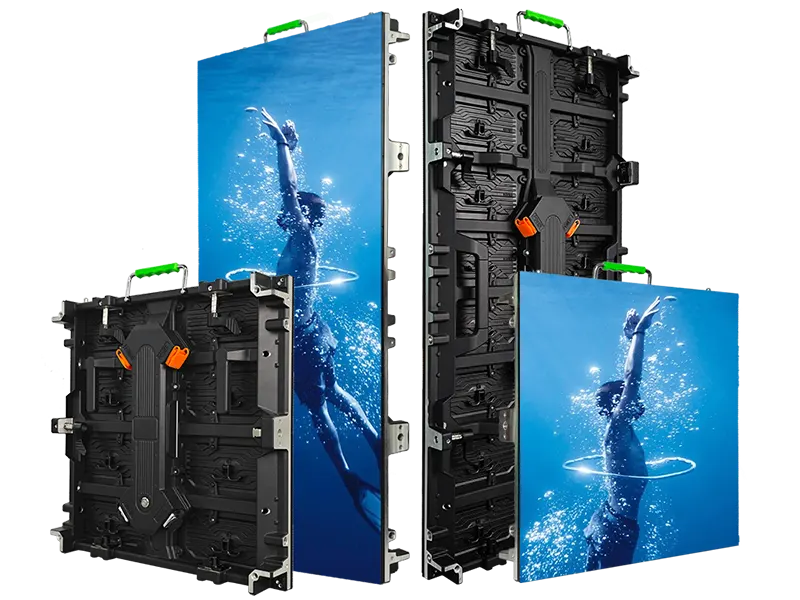
InnoLux
Rental LED display configurations for indoor and outdoor event use
View series →
InnoVisual
Creative rental LED display configurations with curved splicing
View series →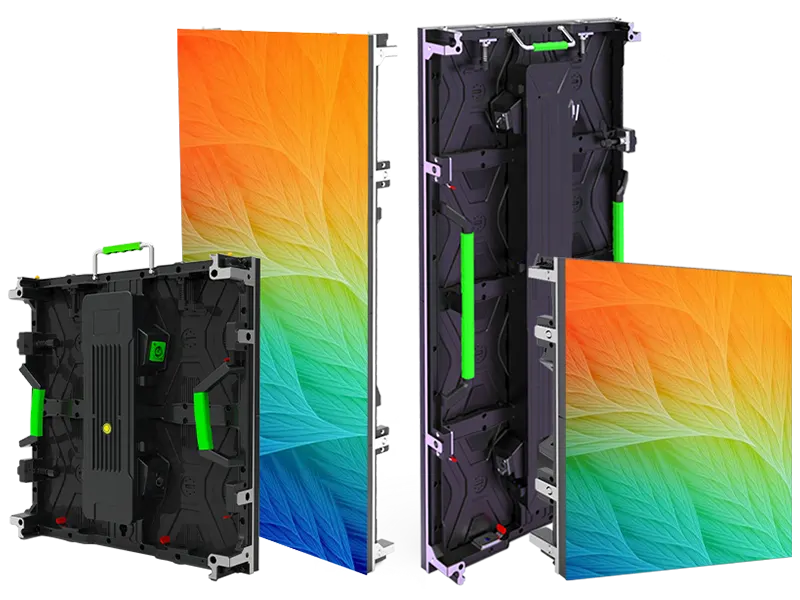
OptiFlex
Flexible rental LED display configurations with curved splicing options
View series →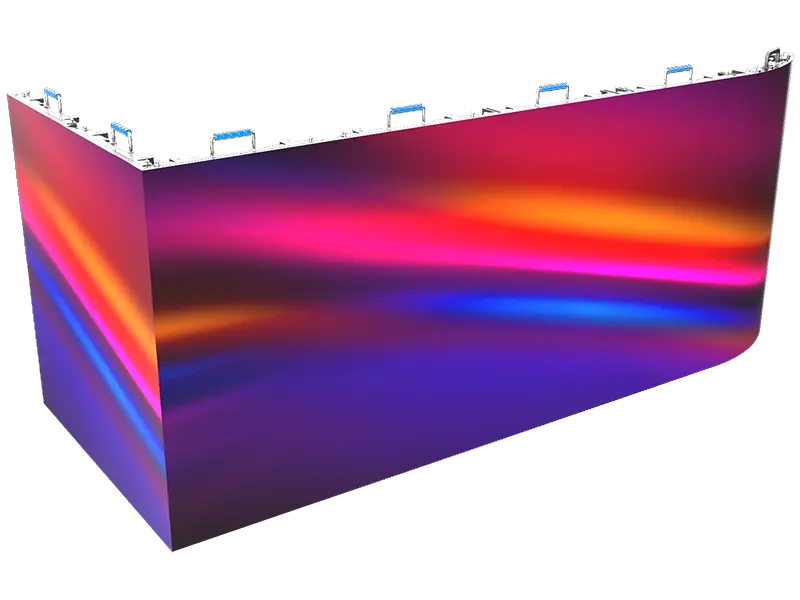
PixelFuse
Creative rental LED display configurations with flexible splicing
View series →Technical references
These references explain technical principles. Confirm the supplied configuration against its own product specification.
Discuss your configuration
Have a question? Just leave your email and a message.